Unlike pool winterization, which is imperative, outdoor spa winterization is less frequent, as many of you appreciate its benefits in a snowy setting! Keeping the water at an ideal temperature in winter means your spa consumes more energy, so watch out for an increase in your electricity bill! Use a winter cover to maintain water temperature.
If you're not going to be using your spa for several weeks, winterizing is recommended to preserve your equipment for the long term, and to maintain water quality when you start up again. Here are our practical tips for protecting your hard or inflatable spa from freezing.
Winterizing your spa is necessary if you use it less frequently or in the event of prolonged frost. Indeed, in regions where frosts are frequent, the cold can damage the tank or the hydraulic circuit. In this case, winterizing an outdoor spa is strongly recommended.
Winterizing your hot tube can take a few hours, as it involves thoroughly cleaning your pool and equipment, and storing the equipment for the winter in the right conditions. These steps are important because they determine the quality of the water for the next season, and avoid the use of maintenance products when the spa is restarted.
If you have an embedded or hard-shell spa you can choose to winterize your outdoor spa in passive or active mode.
This process involves keeping your outdoor spa filled with water, while maintaining a minimum level of operation. To do this, you'll need to activate your spa's filtration regularly, and heat the water from time to time to keep it at around 15 degrees Celsius, especially in the event of frost to prevent damage to your equipment. Finally, you'll need to check and maintain the pH level regularly throughout the winter. In addition, there are special winterizing products for spas that protect against frost and help maintain water quality. The use of a thermal cover is recommended to maintain water temperature and insulate it from the cold.
If winters are particularly severe in your area, with repeated freezing episodes, or if you're away from home without being able to keep your spa running at a minimum, we recommend shutting down your spa after draining all the water.
If you have an inflatable hot tub, go to the dedicated paragraph below.
Here are a few tips regularly shared by our community of ICO Spa users that can be of use to everyone:
In winter, you can opt for a winter cover or an integral spa cover that will protect both the structure of your pool and prevent dirt from polluting your spa. If you have pets or small children, there are models with straps and padlocks for added security. Last but not least, in the event of heavy snowfall or severe frost, don't hesitate to add an anti-freeze cover (like those used for cars) over your isothermal cover. This allows you to remove the snow/ice without having to scrape your tarpaulin and risk damaging it.
The main risk of freezing is in the technical room and piping. It's important to insulate the room as much as possible from the outside air. We recommend using rock wool or insulating sleeves adapted to winter conditions around the pipes. Protect all piping from freezing by using insulating sleeves.
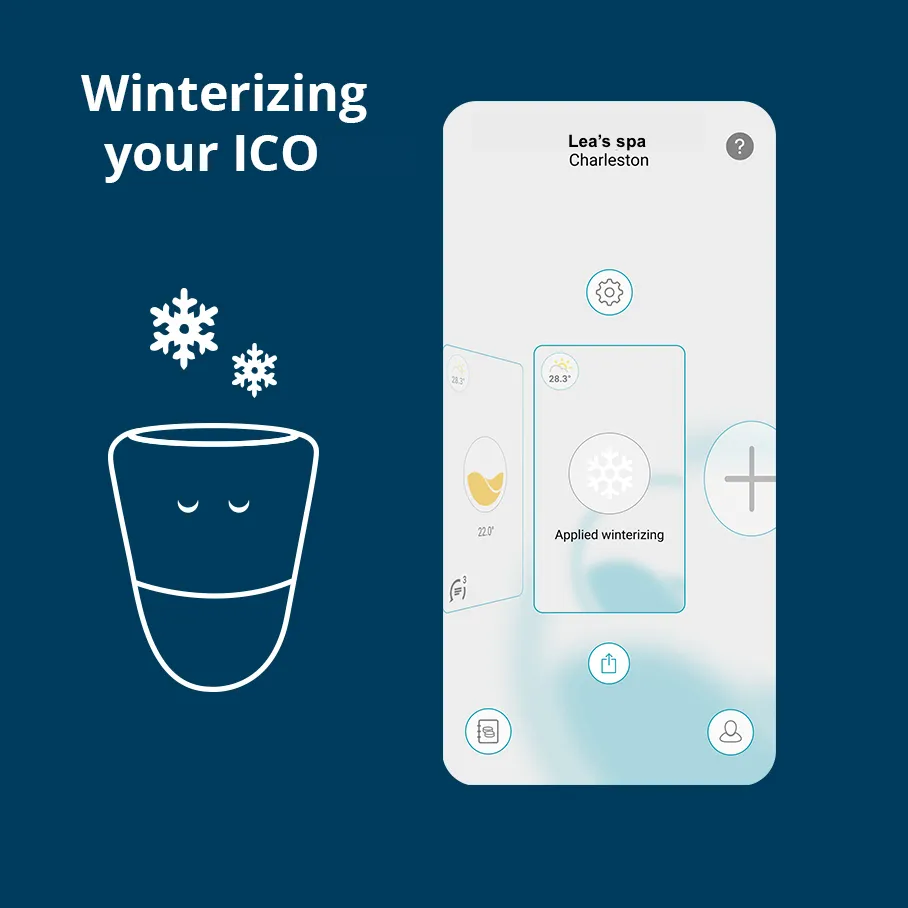
As you can see, winterizing your spa depends on the region where you live, your usage and is optional. Whether you choose to winterize your spa passively or actively, it's imperative to protect the pipes from freezing to preserve your equipment, and to use appropriate protective covers. If you have an ICO connected sensor, read this article to find out how to winterize your ICO..