Winterizing your pool is part of pool maintenance to protect your equipment from freezing and maintain water quality. If you're among those who think it's enough to empty your pool in winter and refill it in spring, you should know that this is a big mistake to avoid! The ground around your pool will exert pressure on the structure. As a result, your pool may crack or warp if left empty for long periods. Last but not least, proper winterization will make the next season much easier. As you can see, winterizing is an essential step. There are two ways to do this: active winterization or winterization. We explain how in this article!
You need to winterize your pool when the water temperature reaches 12°C (including at night!). Depending on the region you live in and the weather, this is usually between late September and mid-October. It's important to winterize early, because frost is your enemy. It can cause serious damage to structures and pipes alike. You've been warned! Discover in this article 5 mistakes to avoid when winterizing your pool .
Winterizing a swimming pool is a relatively long process, since it involves thoroughly cleaning your pool and storing the equipment for the winter in the right conditions. This is a very important step, however, as it determines the quality of the water next season, and means you won't have to use maintenance products when you put your pool back into service.
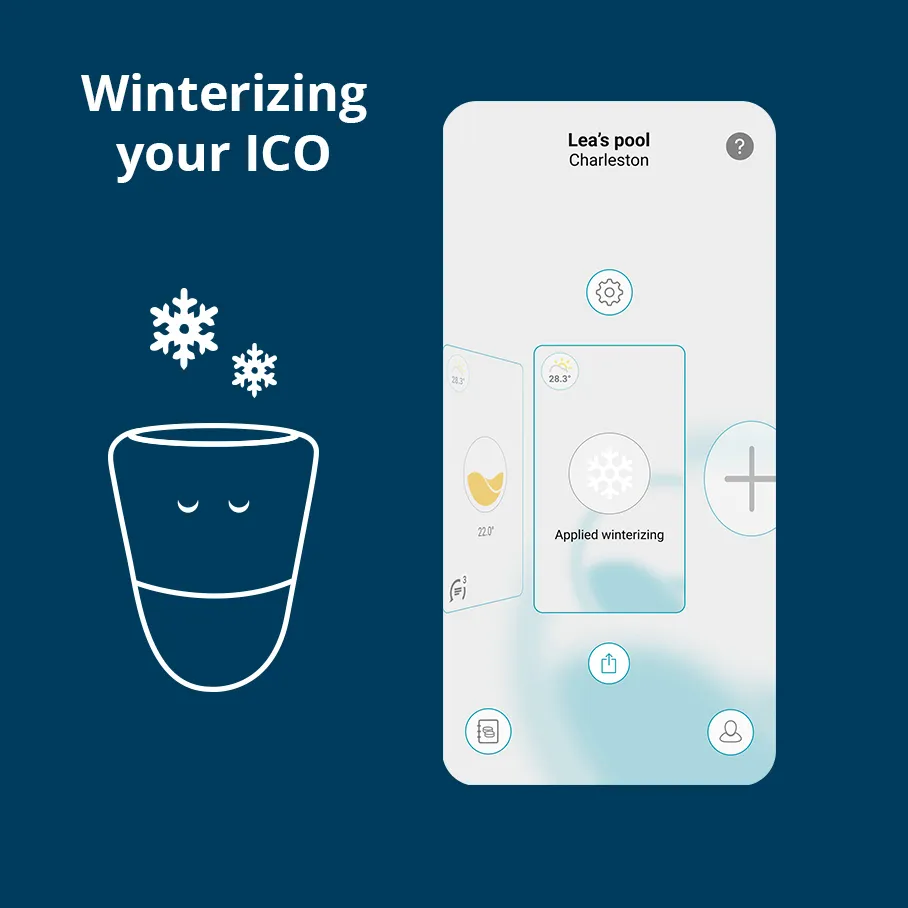
Your water analyser ICO POOL is not designed to remain submerged in your pool all winter, as this would damage the sensors. You must therefore winterize it and store it until the next season. All you need to know about winterizing ICO Pool.
Passive winterization is recommended if winters are rigorous in your location (temperature below 5°C, frequent freezing). This procedure allows the protection of the pipes from freezing. This includes the total stop of the treatments and the filtration during the whole winter period.
The best thing about passive wintering is that you don't have to look after your pool for several months. Neither filtration nor water treatment are necessary! What's more, you'll have peace of mind in the event of an exceptionally cold winter, since the entire hydraulic circuit is cut off and your equipment is well protected.
On the other hand, this type of winterization requires a fair amount of elbow grease to implement, but also when starting up your pool. In conclusion, it's less environmentally friendly in terms of water consumption, since you'll need to refill it in the spring. However, the absence of electricity consumption (filtration) at a time of year when electricity is more expensive, is a real economic offset.
This wintering mode is for you if the winters are mild (temperatures above 0°C). Dynamic wintering involves running your pool at idle speed, without having to drain the water. All you need to do is keep the filtration system running at idle speed (1 to 3 hours a day). Secondly, to regularly treat your water quality, not forgetting to clean the filters when necessary.
Active winterization has several advantages: firstly, it's easy to implement, because after a good cleaning and a winterization treatment adapted to preserve water quality, the pool is already ready. Secondly, in terms of chemical consumption, this method is much more economical, since it requires little treatment when the pool is restarted. As a result, it's also more environmentally friendly, especially as you don't need to empty the water from your pool and then refill it in the spring. To conclude on the advantages, the sight of a pool with full water all winter long is still more aesthetically pleasing than a covered pool.
However, active wintering requires your presence and vigilance throughout the winter. You'll need to maintain water quality (check pH and alkalinity, clean the surface), but above all keep filtration running for a few hours a day throughout the winter. Electricity consumption for your pool is therefore higher compared to passive winterizing.
Here are the steps for successful passive wintering:
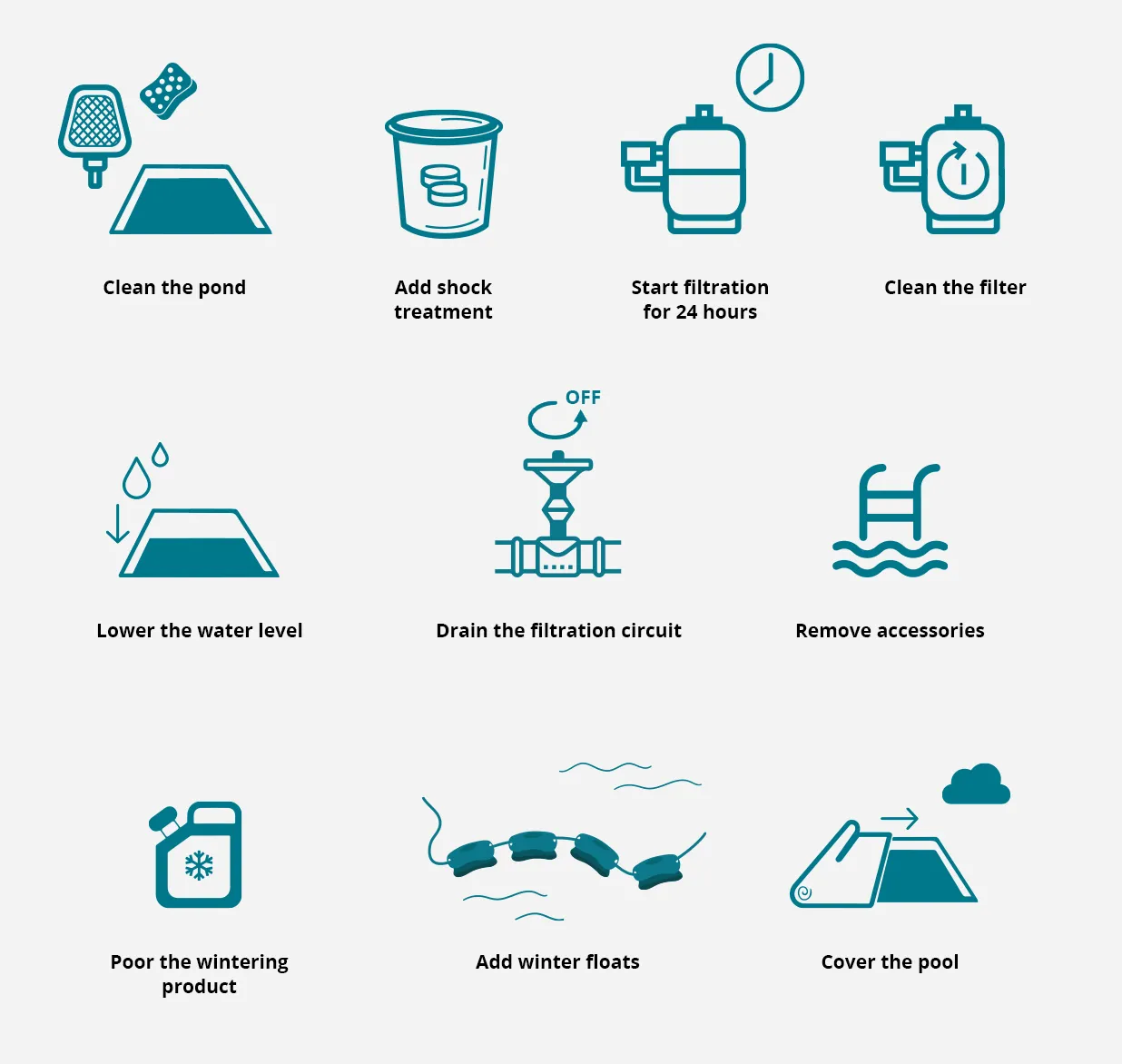
Start winterizing our pool by removing debris, leaves and any unwanted residue from the pool. Thoroughly clean the waterline, walls and bottom of the pool with a brush or vacuum cleaner. This will help you to avoid any problems caused by the cold, and get off to a good start next season.
Use a chlorine or bromine product (depending on your pool). Read the instructions carefully to ensure correct dosage and avoid damaging the liner. These products provide effective protection against algae and bacteria.
Filtration ensures that the chemicals are evenly distributed in the water, providing uniform protection and maximum efficiency. It must be run continuously for the duration of the treatment's action. That is, between 24 and 48 hours, according to the recommendations on the product label.
Clean filters ensure optimum filtration and reduce the risk of malfunctions. Each type of filter (cartridge, sand, diatomaceous earth, etc.) has its own cleaning system that must be maintained regularly.Take this opportunity to clean the entire system (filter pump, filter) one last time.
It's not a question of draining the water completely from your pool (which could endanger its structure), but of lowering its level to around 10 cm below the discharge nozzles. This will prevent overflows and major damage caused by freezing water.
For this step, drain the filtration circuit, close the valves and switch off the filtration. These actions are crucial to prevent frost damage.
This applies to discharge plugs and nozzles, as well as cleaning tools, in a clean, dry place. This protects them from the elements and extends their service life.
This product has an algicide and anti-scale function. It maintains good water quality while protecting your equipment from winter. Don't hesitate to use a broom to spread the product throughout the water. The dosage of winterizing products depends on the brand and, above all, the volume of water in your pool.
Specially designed to absorb ice pressure, they minimize the risk of structural damage.
Cover the pool with a suitable winter cover that provides complete protection for your pool from the elements and debris during the winter.
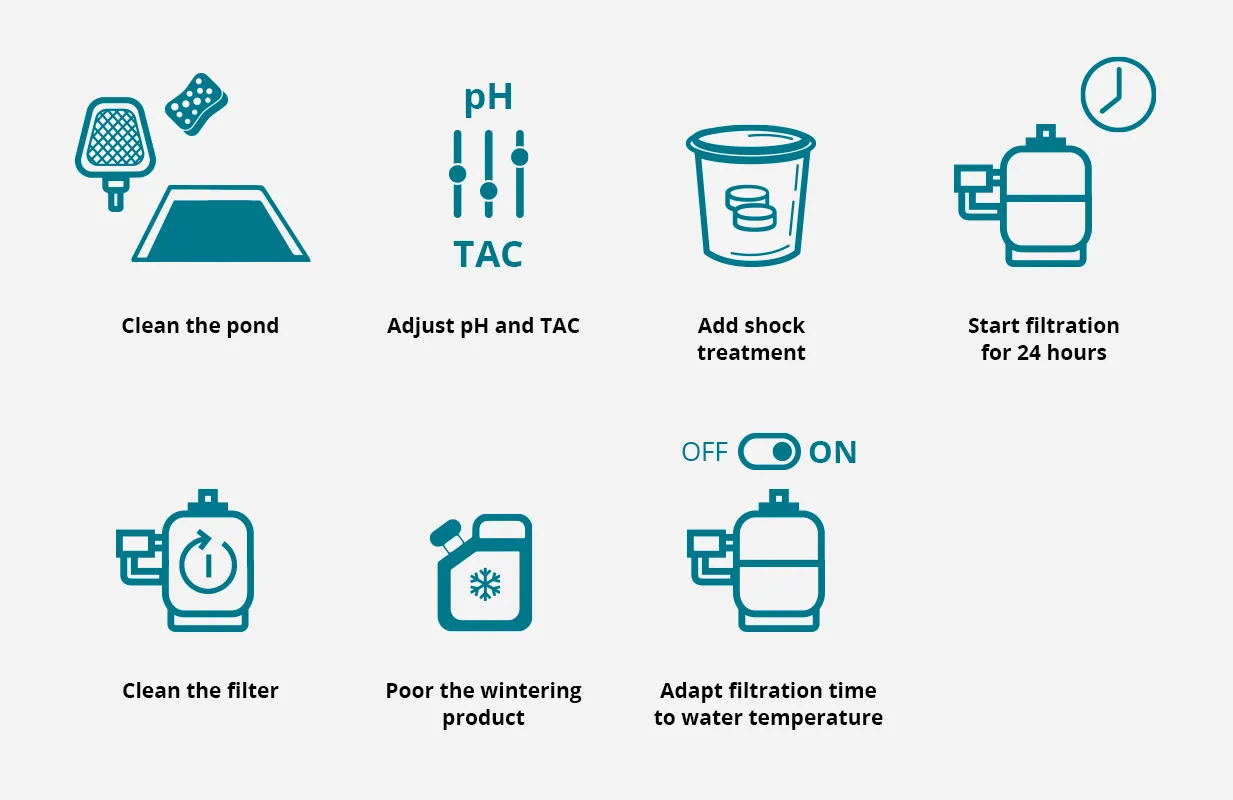
Start the active winterizing procedure by removing debris, leaves and any unwanted elements to ensure a clean and healthy base. This applies to the pool walls, the pool floor and the water line.
Adjust pH and TAC ( Total Alkalimetric Content). Adjust pH if necessary (between 6.9 and 7.4 for a chlorine pool; between 7.5 and 7.8 for a bromine pool). Next, check alkalinity: in autumn, a slightly low TAC can be tolerated (between 80 and 100 mg/l). A balanced pH and adequate TAC are essential for healthy water throughout the winter.
Pour the shock treatment directly into the water. This step reinforces the water's protection against algae, bacteria and other contaminants that thrive in winter.
Activate water filtration for 24 hours. This ensures even product distribution and maximum effectiveness in preventing water problems.
Cleaning the filters : Clean filters optimize filtration performance and maintain water clarity. Secondly, don't forget to clean the filtration pump (tank) too, and to change/renew your filters if necessary.
Pour the product into the water, circling the pool to distribute it evenly. This product (suitable for use with chlorine or bromine treatment) provides extra protection for water and equipment during the winter season.
Filtration adapted to water temperature:To calculate the weekly water filtration time needed to keep your water healthy, you need to divide the water temperature by two. If the water is 8°c, the filtration time should be 4h.
Winterizing cover. It is not compulsory to cover your pool during active winterizing. It's only necessary if temperatures drop unusually low, or in the event of wind or heavy rain, which can affect water quality. So, depending on the winter in your region, it's a good idea to get equipped.
Winterizing your pool provides long-term protection for your equipment. Whether you choose active or passive winterizing, the operation takes time to carry out properly. So plan to devote a weekend to it. And don't forget that this thorough cleaning will improve your pool's water quality next season.
If you want to winterize your ICO, we'll explain everything!