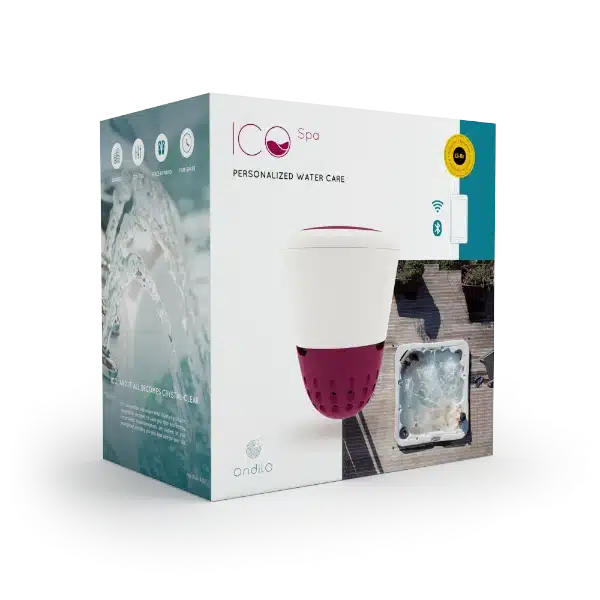
If you have a swimming pool or a hot tub, you know how important it is to maintain water quality for a pleasant and healthy swimming experience. There are several different types of water testing equipment available. The most common are disposable test strips, electronic testers and smart water analysers. In this article, we’ll discuss the pros and cons of these solutions

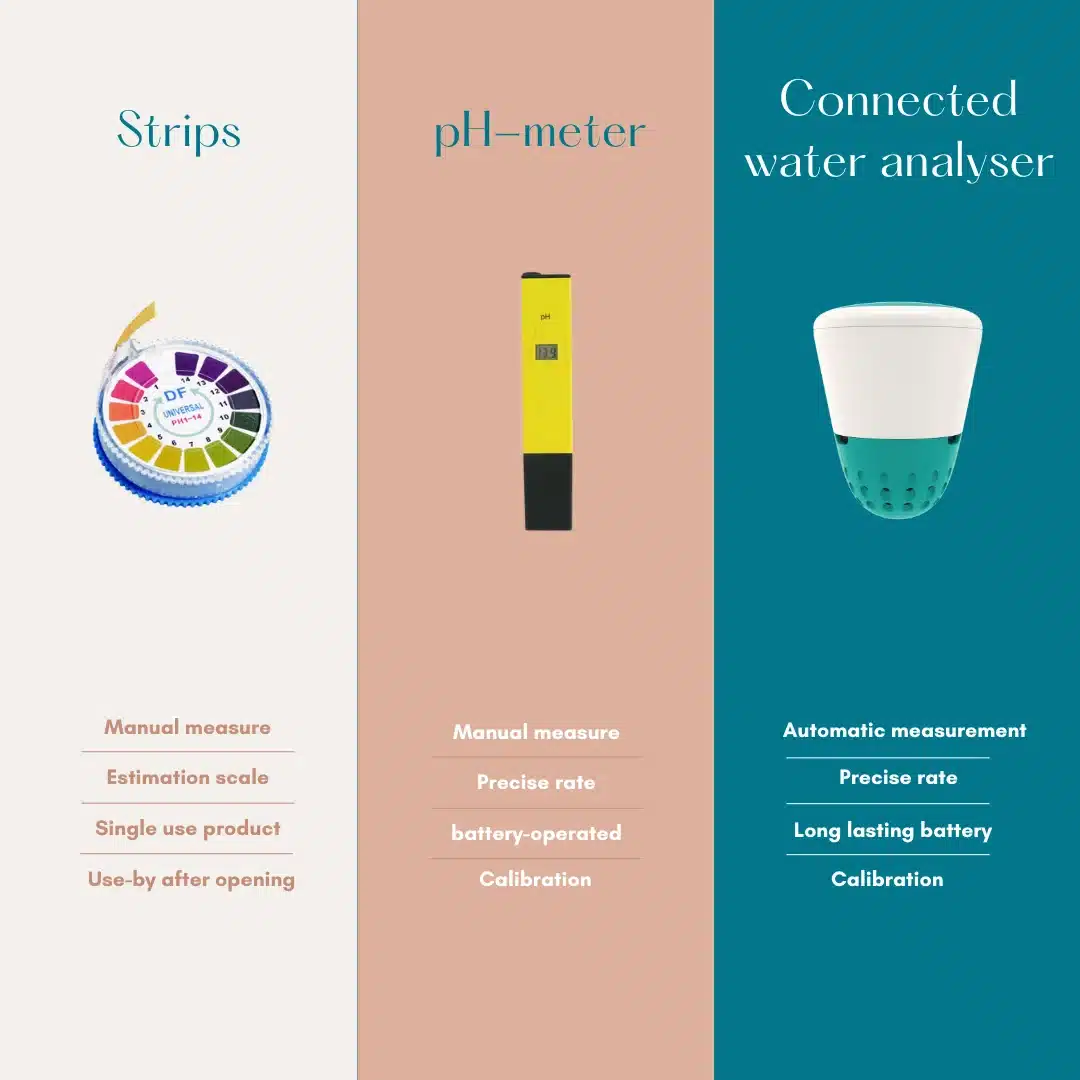
| Test strips | Electronic testers | Connected water analysers | |
| Taking measurements | manual | manual | automatic |
| Accuracy of measurements | estimates | accurate results | accurate results |
| Number of parameters | from 4 to 7 | from 1 to 2 | from 3 to 4 |
| Constraints | – single-use – use by date after opening the jar | – battery needs changing – probe calibration | – probe calibration |
What parameters are analysed to check the water quality of a swimming pool or spa?
To test the various water parameters, you can choose between the manual method with test strips and electronic testers, or the automatic method with connected water analyzers.
Water quality must be measured using various parameters: some relate to the water’s chemical balance (pH, TAC, TH), others to disinfection (chlorine levels, ORP), not to mention temperature, stabiliser levels or salt levels for swimming pools fitted with an electrolysis system.
Find out more about tous les paramètres à analyser pour pour l’eau d’une piscine ou d’un spa
The pH balance in your pool or spa is of paramount importance because of its impact on pool disinfection. The pH balance also influences the disinfectant's ability to effectively kill bacteria and harmful organisms in the water More info about pH here .
Disposable strips

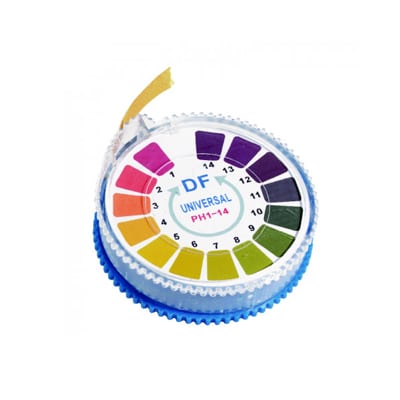
Test strips are disposable analysis tools that contain chemical reagents sensitive to various components of pool water, such as pH.
There are test strips designed specifically for different disinfection methods: chlorine, bromine, salt or active oxygen. Depending on the brand and product, these can analyse between 4 and 7 parameters.
To use them, dip the test strip into the water in your pool or spa and wait for the chemical reagents to change colour to indicate the level of the component.
To ensure accurate results, store them at room temperature, make sure the cap is tightly closed, and do not use them after the expiry date.
Test strips, which are the most affordable option (costing between 20 and 30 euro cents per test), provide results that are more or less reliable and accurate. This is because reading the result involves interpreting the colour displayed.
There are, however, test strip readers available. Once the test strip has been dipped in water, the required values are displayed digitally on the screen. This compensates for any misinterpretation of colors. It's an additional investment (approx. 100 euros) that can prevent many misinterpretations and, above all, over-consumption of chemical products.
| BENEFITS | DISADVANTAGES |
| – The price (between €10 and €40 per 100 tests) – Wide availability of the product (online and in-store) – Standalone solution (does not rely on a service or device) – Storage: the test strips must be stored in a clean, dry place at a moderate temperature | – Accuracy of measurements (an incorrect depth or a reading taken in the wrong place will distort the result) – The reading is only temporary; otherwise, the results may be distorted due to the oxidation of the chemical reagents – The user interprets the result – Not very environmentally friendly – Use-by date: once the strip pack has been opened, the strips will oxidise. |
As you can see, test strips are fairly reliable and inexpensive tools. However, reading the result is an interpretation of the colour indicated, so it's not a very accurate instrument. If your water needs chemical treatment, it will be difficult to know the effective dose of product to add. You run the risk of over-consuming chemical products or carrying out ineffective treatments. Finally, be careful about the strips you buy. You need to choose a test strip reference based on the type of water treatment you are using (chlorine, bromine or active oxygen, salt).
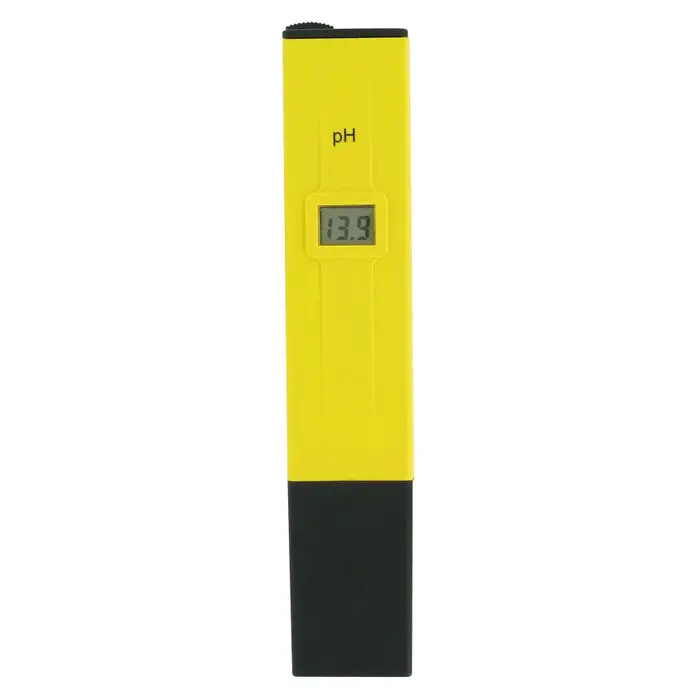
Electronic pH-meter

Electronic testers, or pH meters, operate using an electrode tip and display the results either on a dial marked with different colours or on a digital screen.
It’s very easy to use: simply dip the probe into the pond water to measure the pH of your pond water.
Electronic testers or probes are much more reliable, but it's best to avoid the low-priced gadgets. These devices allow you to read a very precise digital result. However, they need to be calibrated regularly (depending on the model). You can ask your specialist for advice, as he or she is familiar with specialist pool brands.
Finally, some testers analyze only one parameter (pH or ORP), while others allow you to test several water parameters, which is more economical and, above all, more practical!
| BENEFITS | DISADVANTAGES |
| – Accurate to the nearest tenth – Low cost (around €30) | – Runs on batteries – Accuracy of the analysis (the probe must be properly submerged and the filtration system must be active to ensure a reliable result) – Regular calibration required |
The accuracy of the results obtained with a pH meter, combined with its price, makes this instrument a valuable tool for maintaining the water balance in your swimming pool or spa. However, it is essential to take measurements correctly by ensuring the probe is fully submerged to obtain a reliable result. Unlike connected probes, however, measurements are taken manually and do not indicate the dosage of chemicals to add if your water has a pH problem.
Smart water analysers for swimming pools and spas

Smart water analysers were first launched on the market around ten years ago and have become increasingly popular over the last five years.
These connected water analysers are smart devices that use technology to analyse the water in a swimming pool or spa with high precision, operating completely autonomously with automatic measurements. The results are displayed directly on a smartphone, making it easier and more accurate to read the results.
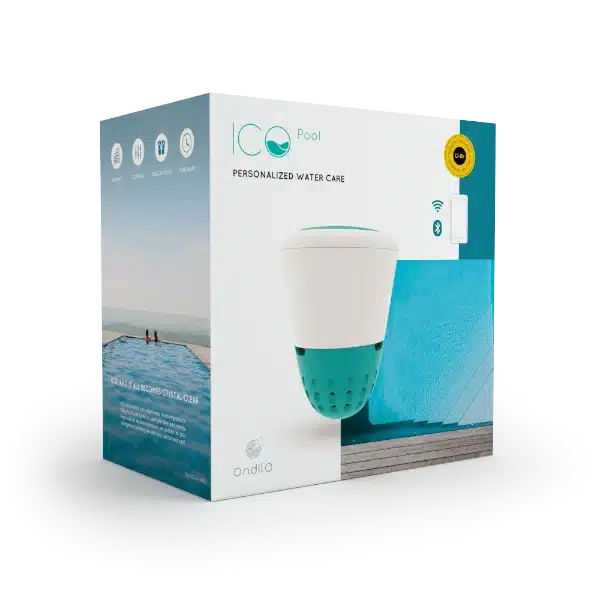
Some connected sensors like ICO Pool give you access to your test results on your smartphone, along with recommendations for chemical treatments and the correct dosage.
The advantage of these devices is, of course, their ease of use, as the key parameters of your pool water are measured automatically every day, several times a day.
| BENEFITS | DISADVANTAGES |
| – Automatic meter readings – Measurement reliability: the results are accurate and verifiable (mineral water test). Readings are taken at the correct depth at several points in the basin. – The sensors have a long lifespan (several seasons) and on certain devices such as ICO, sont remplaçables facilement. – Environmentally friendly: most of the probes are recyclable. The accuracy of the results means fewer chemicals are needed | – Price: between €250 and €500 – Maintenance requires regular calibration and regular moistening of the sensor during the winter months. – Fragility |
Read the comparison of smart thermostats produced by Ma Piscine tranquille in 2023
Discover ICO Pool V2 Essential + the smart water analyser for swimming pools
- measurements once per hour : pH, ORP-Redox, temperature, and TDS for the salt version
- personalised recommendations based on the volume of your pool and the treatment products used.
- a Wi-Fi connection
- a rechargeable battery
- a calibration kit included


How to do a reliable water testing
It is worth remembering that, regardless of the method used, it is important to carry out the analyses under the right conditions in order to obtain reliable results.
Whether you use a colorimetric strip or an electronic tester, here's how to do your test:
- Where can I take the test? Take your test in the middle of the pool, and test the water as far away from the edge as possible. This is because the water on the steps or on a submerged area is less representative than the water in the middle of the pool
- When to carry out a water analysis : It is recommended that you take the test in the morning or in the evening, but always at the same time! This allows you to compare your results from one test to the next
- How to use a test strip: Dip the test strip into the water (preferably in the middle of the pool) and read the result immediately. Depending on the brand used, the result should be read between 5 and 15 seconds after immersion. The colour continues to change for several minutes, which is why it is important to read it at the right time.
- Using an electronic tester: Place your tester under the surface of the water (3cm minimum) then wait 5 to 10 seconds before raising your tester to read the result.
In summary: which analysis tool should you choose for your pool / spa ?
Ultimately, the choice of tool depends on your expectations in terms of convenience and accuracy. Whilst test strips remain a cost-effective stopgap solution and manual pH meters a slightly more accurate alternative, they are time-consuming and leave room for misinterpretation.
Manual methods (test strips and electronic testers) mean you have to play at being a chemist, with the risk of using too much of the product
Although it requires an initial investment, a connected analyser such as the ICO acts as an assistant by carrying out automatic measurements and recommending the exact amount of product to add.