ORP salt sensor (gold) compatible with ICO pool and ICO spa
99,00€
The ORP probe measures the redox potential of the water in your salt-treated swimming pool or spa. Thanks to the Twist&Lock system, it is easy to replace.
The gold ORP probe is a wearing part, as it is made up of electrochemical components.
– Compatible with ICO for salt-treated water
– Compatible with ICO Pool and Spa: Designed to work seamlessly with ICO Pool and ICO Spa systems, ensuring full compatibility.
-Easy installation thanks to the removal key supplied with your ICO (Twist&Lock system), which makes installation a breeze.
Replacing an ICO sensor is a simple procedure that extends the device’s lifespan without having to replace the whole unit.
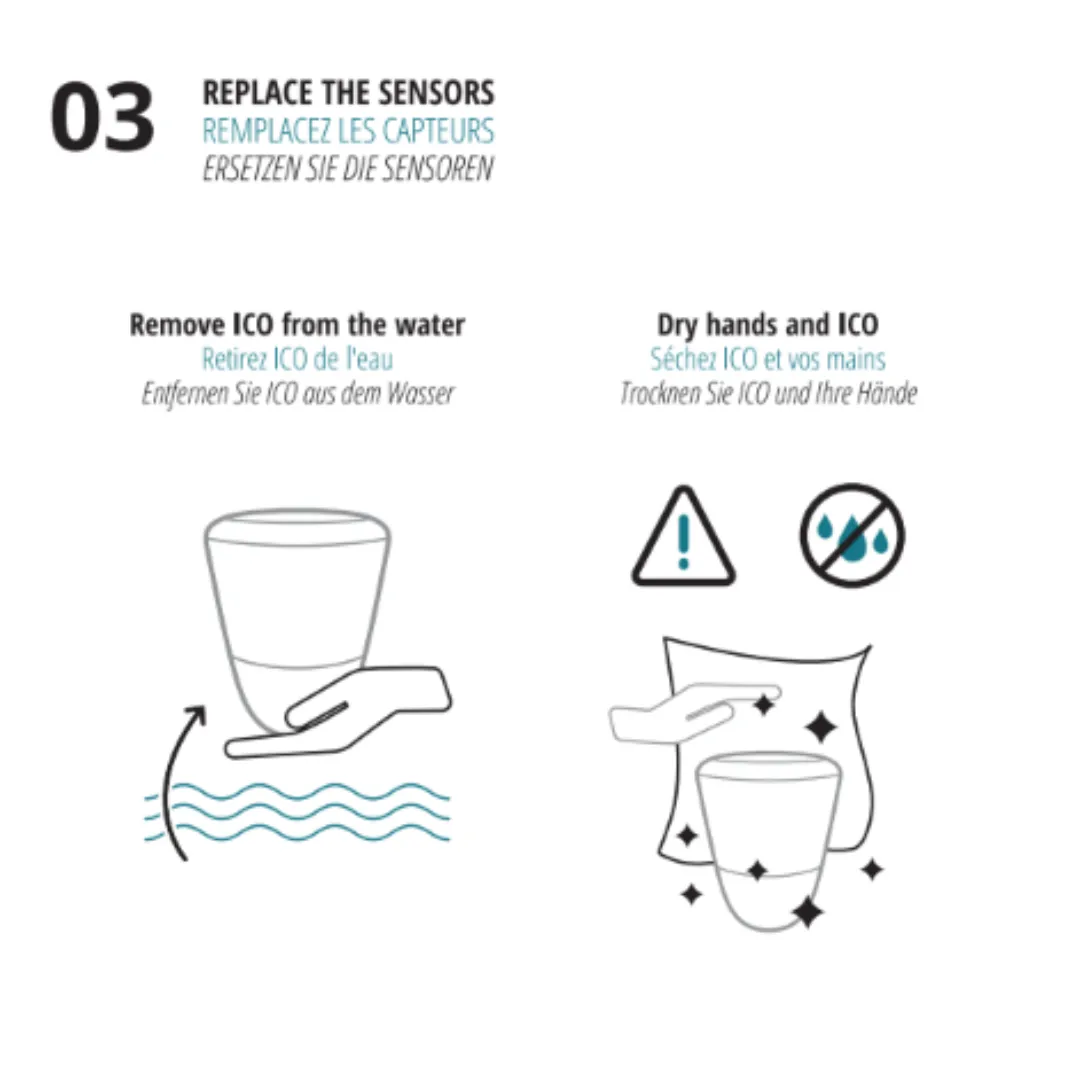
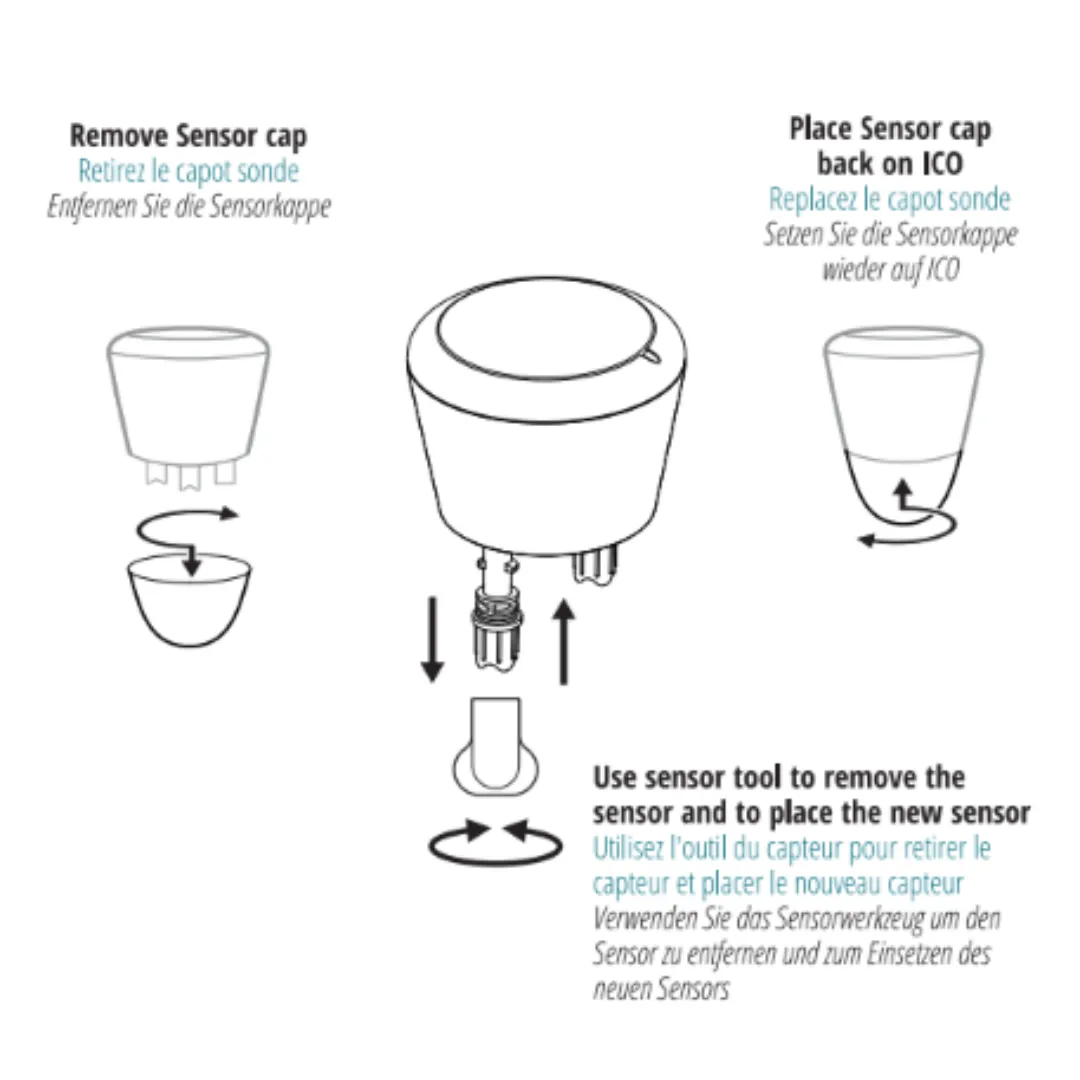
First, remove the ICO from the water, dry it thoroughly, then unscrew the lower section to access the probes. Using the tool provided, remove the used probe by unlocking it.
Next, insert the new ORP probe and secure it properly using the tool provided, then check that the two arrows are aligned (one on the unit, the other on the probe).
Once the replacement has been carried out, the device must be placed back in the water for several hours to resume its measurements.
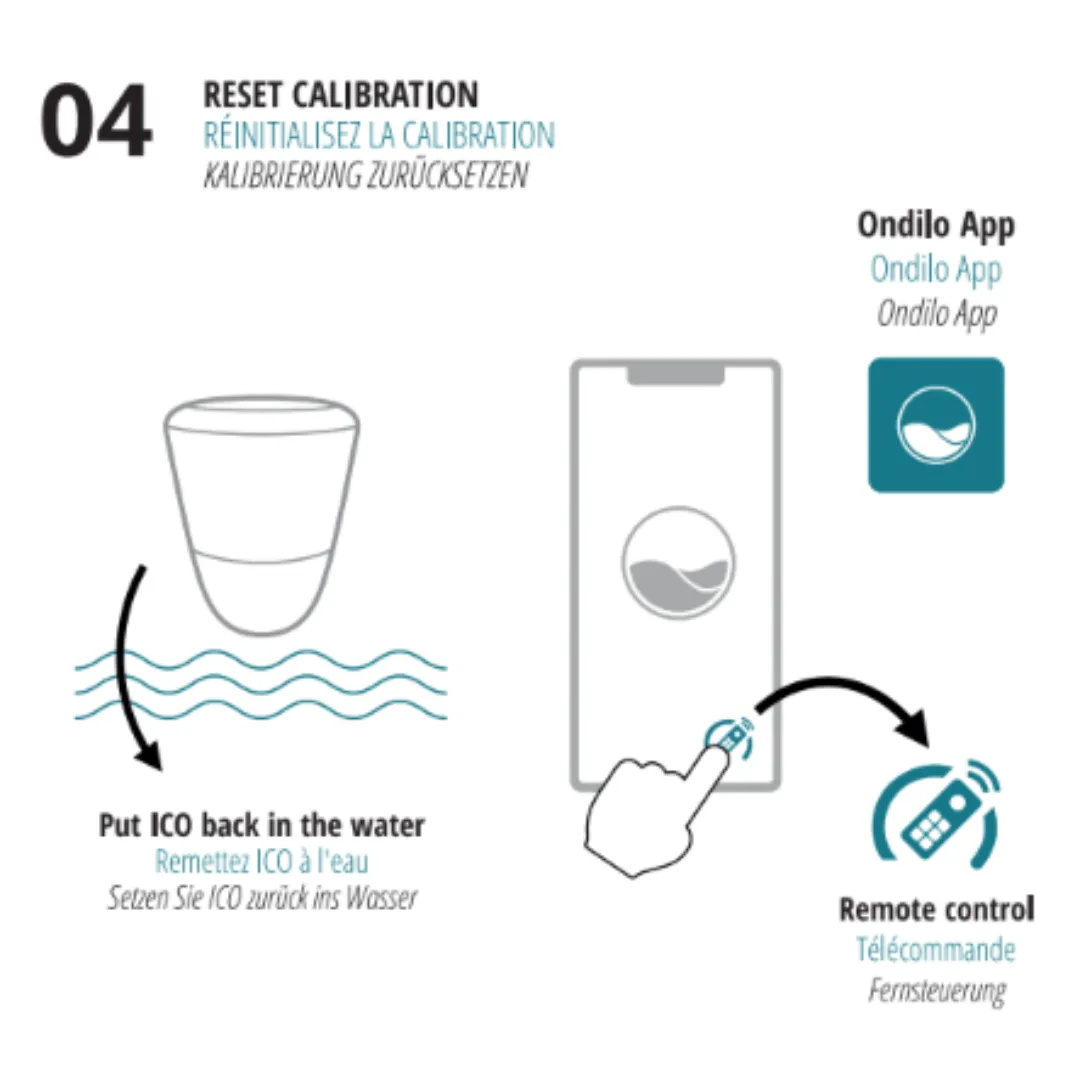
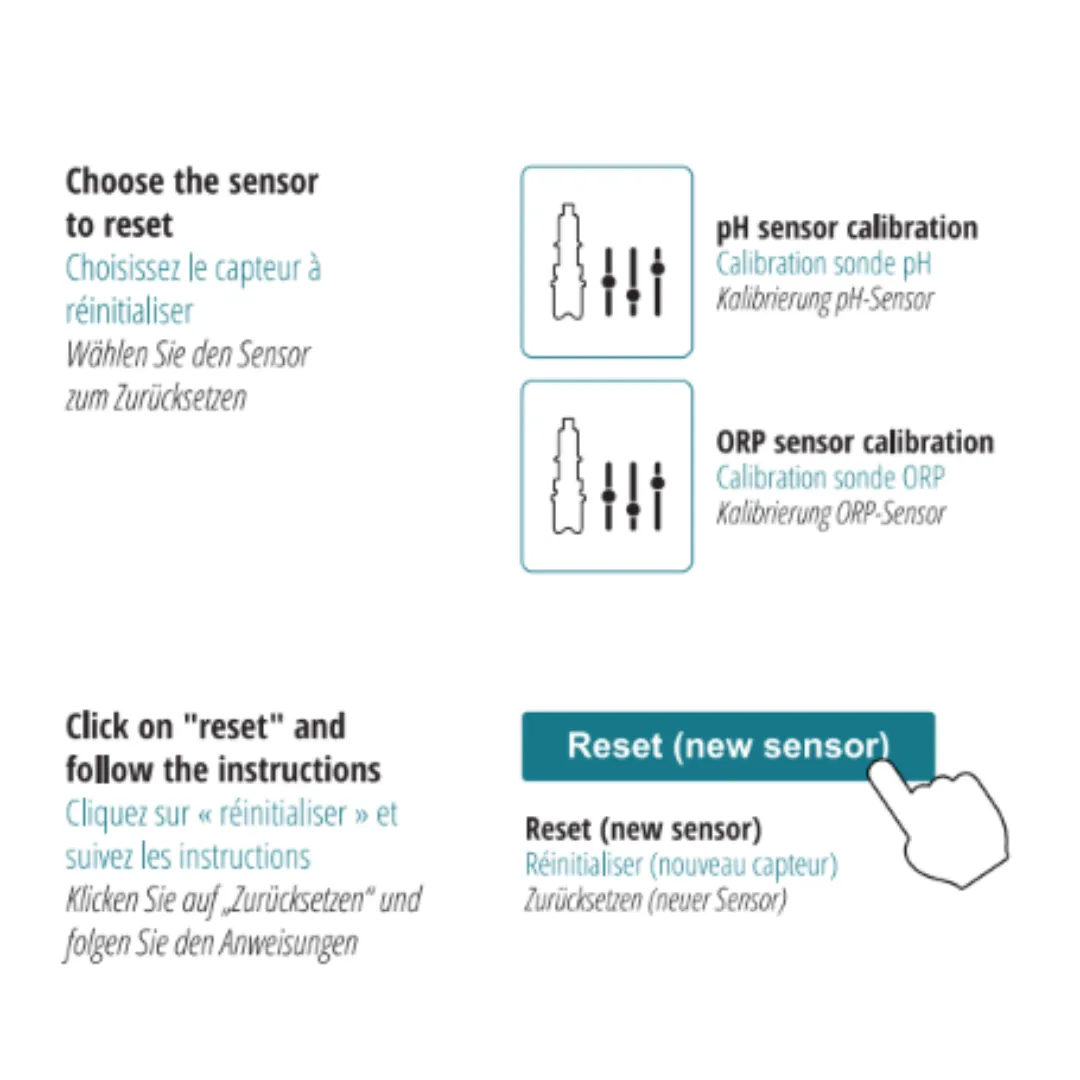
Finally, it is important to register the new sensor in the app in order to reset the settings and ensure it works properly.
The ORP salt (gold) probe kit comprises an ORP salt (gold) probe, a calibration stand, a regeneration solution, a 475 mV ORP buffer solution, and a user guide for calibrating and replacing the probe.
There is no need to calibrate a new ORP sensor, as calibration is used to correct measurement drift caused by wear and tear.
The ORP sensor on your ICO measures the ORP (oxidation-reduction potential) of the water in your swimming pool or spa. This essential feature allows you to monitor water quality.
If the ORP probe is not properly maintained and calibrated regularly, readings may drift over time and become less reliable. This can lead to the incorrect use of treatment products (over- or under-dosing) and affect water quality as well as your swimming experience.
To maintain its performance and extend its service life, it is recommended that you clean and calibrate the ORP probe regularly. When you are not using your ICO, it is advisable to store it in a room at room temperature (15–25°C), with the black caps fitted to the probes, which contain small sponges soaked in storage solution.
Tips for calibration:
Perform the calibration in a room at room temperature (recommended temperature is 25°C / 77°F).
Place the ICO next to your smartphone.
In the ICO app, tap ‘Remote Control’ and then ‘Calibrate ORP Probe’
If you wish to calibrate the pH and ORP probes, start by calibrating the pH probe and finish by calibrating the ORP probe
Rinse the probes and calibration support thoroughly between 2 solutions. Dry carefully with a soft cloth.
Steps for calibration: The app guides you step by step
Switch on the ICO and connect it via Bluetooth. Rinse the probes under running tap water and dry them with a damp cloth.
Pour the 475 mV solution into the holder and carry out your ORP calibration
Rinse and dry the base and probes of your ICO with a soft cloth.
This video tutorial explains why and how to calibrate the sensors on your ICO.
Once your calibrations are complete, a message displaying the result, along with the date and values, will appear. The results of the last ORP calibration can be viewed in the Settings/ICO section
Step 4: ORP Calibration Results
the ORP calibration values are displayed
Calibration history
the values from the most recent pH and ORP-redox calibrations are displayed
Specifications table
Warranty
1 year
Probe
Made from ASA, with a glass electrode
Included
2 sachets (regeneration solutions, ORP 470 mV)
Packaging dimensions
15,8cm x 15,6cm x 4,1 cm
Weight
0,16kg
Product contents
This pack contains: • 1 gold ORP probe (for swimming pools or spas using salt treatment) • 1 calibration kit containing:
1 ORP 470 mV buffer solution
1 ICO calibration stand
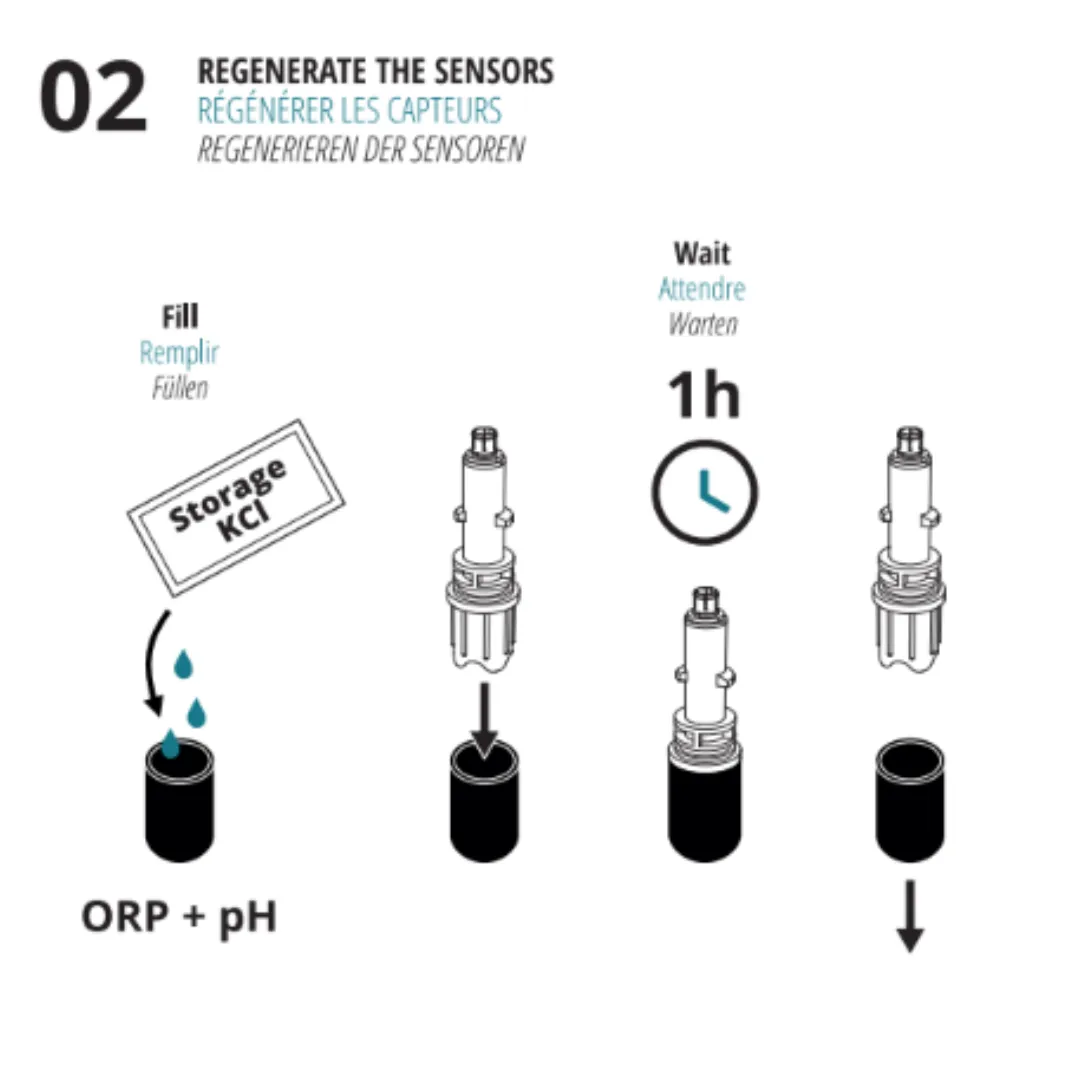
1 regenerative solution
1 guide to calibrating and replacing the sensor
Compatible with ICO Pool and ICO Spa
FAQ
How do I install a new ORP probe?
Replacing an ORP probe couldn't be simpler: using the removal tool supplied with the ICO, it's easy to unclip the old probe and clip the new one back in.
Each sensor has a specific colour to help identify them when they need replacing
The twist-and-lock system allows the probe to be turned a quarter turn into the designated slot.
The twist-and-lock system allows the probe to be turned a quarter turn into the designated slot.
Insert the new probe and turn it a quarter turn to lock it in place
Check that the probes are correctly positioned: the markings on the two notches (one on the device, the other on the probe) must be aligned.
Calibration is used to compensate for measurement drift caused by wear and tear; therefore, it is not necessary to calibrate a new sensor. However, if you wish to ensure the accuracy of the measurement, you can carry out a calibration
Subsequently:
For seasonal use: it is recommended that you calibrate the system when you start up the pool again.
For annual use: calibration every six months is recommended.
Why does the ORP probe need to be stored in a KCl solution?
The reference electrodes (sensor bulbs) of the pH/ORP probes on ICO-connected water analysers must always be kept moist. They should be stored as follows: immersed in a storage solution (KCl solution) using the sponges, and protected with the black caps (sponges and black caps supplied with the product).
Under normal use, the sensors are designed to last for several years. Depending on the conditions of use and winter storage, the service life is 2 to 4 years for ORP and pH sensors, and 5 to 6 years for the TDS sensor.